Hajj Guidance
Ziyarat in Makkah and Madinah: Important Places to Visit During Your Trip
The main Ziyarat places in Makkah and Madinah, why each one matters, how the Rawdah visit works and a few tours worth adding, like the Kiswa factory and the Hira Cultural District.
Places That Bring the Seerah to Life
Reading about the Hijrah is one thing. Standing at the foot of Jabal Thawr, where the Prophet (peace be upon him) and Abu Bakr (may Allah be pleased with him) hid for three nights, is another. Ziyarat isn't a ritual of Hajj or Umrah, but for most pilgrims it's one of the most moving parts of the trip.
Below are the places our groups usually visit, with a line or two on why each matters. One reminder before you go: these are places of remembrance. Touching walls, taking soil or tying threads for blessing has no basis, so keep to dua and reflection.
Jabal al-Nour and the Cave of Hira
This is the mountain where the first verses of the Quran were revealed to the Prophet (peace be upon him), in the Cave of Hira near the top. The climb is steep and takes an hour or more, so most elderly pilgrims see it from below. If you do climb, go early in the morning and take water.
Close by is the Hira Cultural District, with a Revelation Exhibition, a Holy Quran museum and gardens. It's a good alternative for families who can't make the climb. Our Hira Museum and Zamzam Factory tour covers both in one trip.
Jabal Thawr
South of Makkah, this is the mountain with the cave where the Prophet (peace be upon him) and Abu Bakr sheltered at the start of the Hijrah to Madinah. Like Jabal al-Nour, the climb is hard. Seeing it and remembering the story is enough for most pilgrims.
Jannat al-Mu'alla
The old graveyard of Makkah, not far from the Haram. Sayyidah Khadijah (may Allah be pleased with her), the first wife of the Prophet (peace be upon him), is buried here along with many members of his family. Men can visit to make dua for those buried there. The graves are simple and unmarked, as is the practice in Saudi Arabia.
Masjid Aisha at Taneem
This is the nearest miqat for people already in Makkah who want to put on Ihram for another Umrah. It's named after Sayyidah Aisha (may Allah be pleased with her), who entered Ihram from here during the Farewell Hajj. Many pilgrims come here after Hajj. Ask your group scholar first whether an extra Umrah suits your schedule and energy.
Arafat, Muzdalifah and Mina Outside the Hajj Days
Groups that arrive early sometimes visit the Mashair before the 8th, to see Jabal al-Rahmah, Masjid Namirah, Masjid al-Mash'ar al-Haram in Muzdalifah and Masjid al-Khayf in Mina. Seeing them empty makes the real days much less confusing. Our Mina, Arafat and Muzdalifah guide explains what they're like during Hajj.
The Kiswa Factory
This is where the black cloth that covers the Kaaba is woven and embroidered, partly by hand. Watching the gold calligraphy being stitched is something most visitors talk about for days. Visits need permits and appointments booked in advance. Our Kiswa Factory tour handles the paperwork and also stops at Hudaibiyah, where the famous treaty was signed. Book at least three days ahead.
Madinah: Masjid Quba
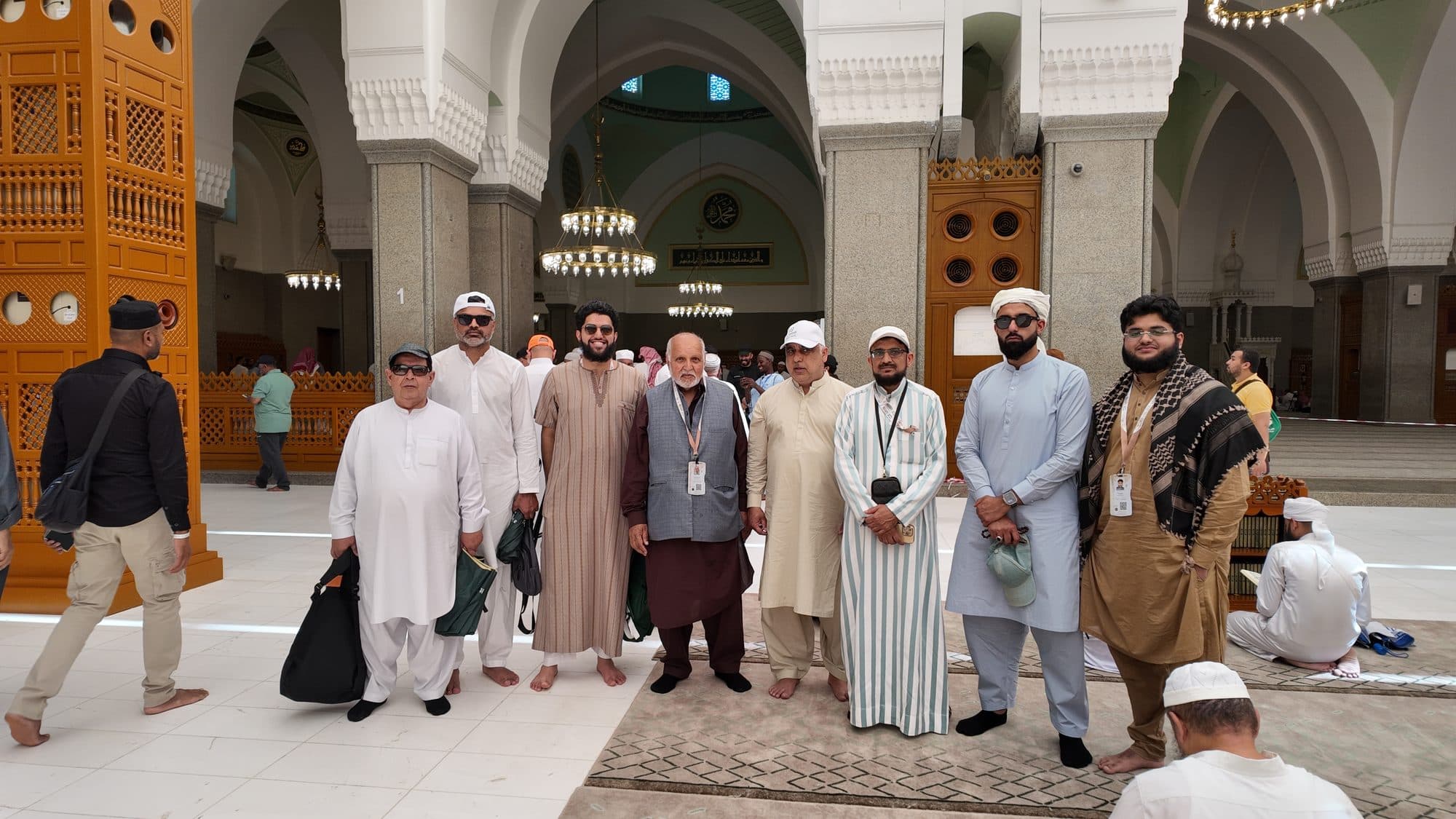
The first mosque built in Islam, founded when the Prophet (peace be upon him) arrived in Madinah. He used to visit it regularly, and a hadith tells us that praying two rak'ah in Masjid Quba carries the reward of an Umrah. Make wudu at your hotel and pray there.
Mount Uhud and the Martyrs of Uhud
The site of the Battle of Uhud. At its foot lie the martyrs of the battle, including Sayyiduna Hamza (may Allah be pleased with him), the Prophet's uncle. Next to it is the small hill where the archers were posted. A good guide will tell the story of the battle right there, and it stays with you.
Masjid al-Qiblatain and Jannat al-Baqi
Masjid al-Qiblatain is where the command came to change the qiblah from Jerusalem to the Kaaba, which is how it got its name, the mosque of two qiblahs.
Jannat al-Baqi, right next to Masjid an-Nabawi, is the main graveyard of Madinah. Many of the Prophet's family and companions are buried here, including Sayyiduna Uthman (may Allah be pleased with him). Visiting hours for men are usually after Fajr and after Asr.
The Rawdah
The Rawdah, Riyaz-ul-Jannah, is the area between the Prophet's (peace be upon him) house and his minbar inside Masjid an-Nabawi. Entry now needs a time slot booked through the Nusuk app, and slots go quickly in the Hajj season. In AlFursan's Hajj 2027 packages the Rawdah visit, Salam and Madinah Ziyarat are included, and our team arranges the bookings for the group.
Plan Your Ziyarat With Your Package
When you plan, check which Ziyarat your package includes and whether you go to Madinah before or after Hajj. Most of our Hajj 2027 packages are Madinah first, which means your Madinah Ziyarat happens before the Hajj days. If you're also thinking of an Umrah trip later, our Umrah guide covers Ziyarat there too.
Contact AlFursan for your Hajj 2027 booking. See our Hajj 2027 packages or call 0333-3366661 and we'll tell you exactly which visits come with each package.
Related articles
Hajj Guidance
Step-by-Step Guide to the Hajj Rituals for First-Time Pilgrims
A plain, day-by-day walk through Hajj Tamattu for first-time pilgrims from Pakistan: Umrah, the 8th to the 13th of Dhul Hijjah, Rami, Qurbani, Tawaf al-Ifadah and the farewell Tawaf.
Umrah Guidance
Umrah from Pakistan: A Step-by-Step Guide for Your First Umrah
Planning your first Umrah from Pakistan? This step-by-step guide covers when to go, choosing a package, documents, health, learning the rituals, packing and your visit to Madinah.
Hajj Guidance
Hajj Group Packages vs Private Packages: Which Should You Choose?
Should you go with a Hajj group or ask for a private, tailored package? What each really means during Hajj, what it costs, and who each one suits.