
Hajj Guidance
Dos and Don'ts of Ihram: A Simple Guide for Pilgrims
What Ihram is, what men and women wear, when to put it on when travelling from Pakistan, what's forbidden and what's allowed, and what happens if you make a mistake.
Ihram Is More Than Two White Sheets
Ihram is the state you enter when you make the niyyah for Hajj or Umrah and say the talbiyah. The white cloth men wear is only the outward part. Once you're in Ihram, some ordinary things become forbidden for a while, and that's what this guide is about.
We've kept it to the points scholars broadly agree on. Where the schools differ, we say so. Most pilgrims from Pakistan follow Hanafi rulings, and the scholar in your group can answer anything specific.
What Men Wear
Two plain white unstitched sheets: one wrapped round the waist (izar) and one over the shoulders (rida). The head stays uncovered and the feet should be open at the top, so chappals rather than shoes. A belt or money pouch round the waist is fine.
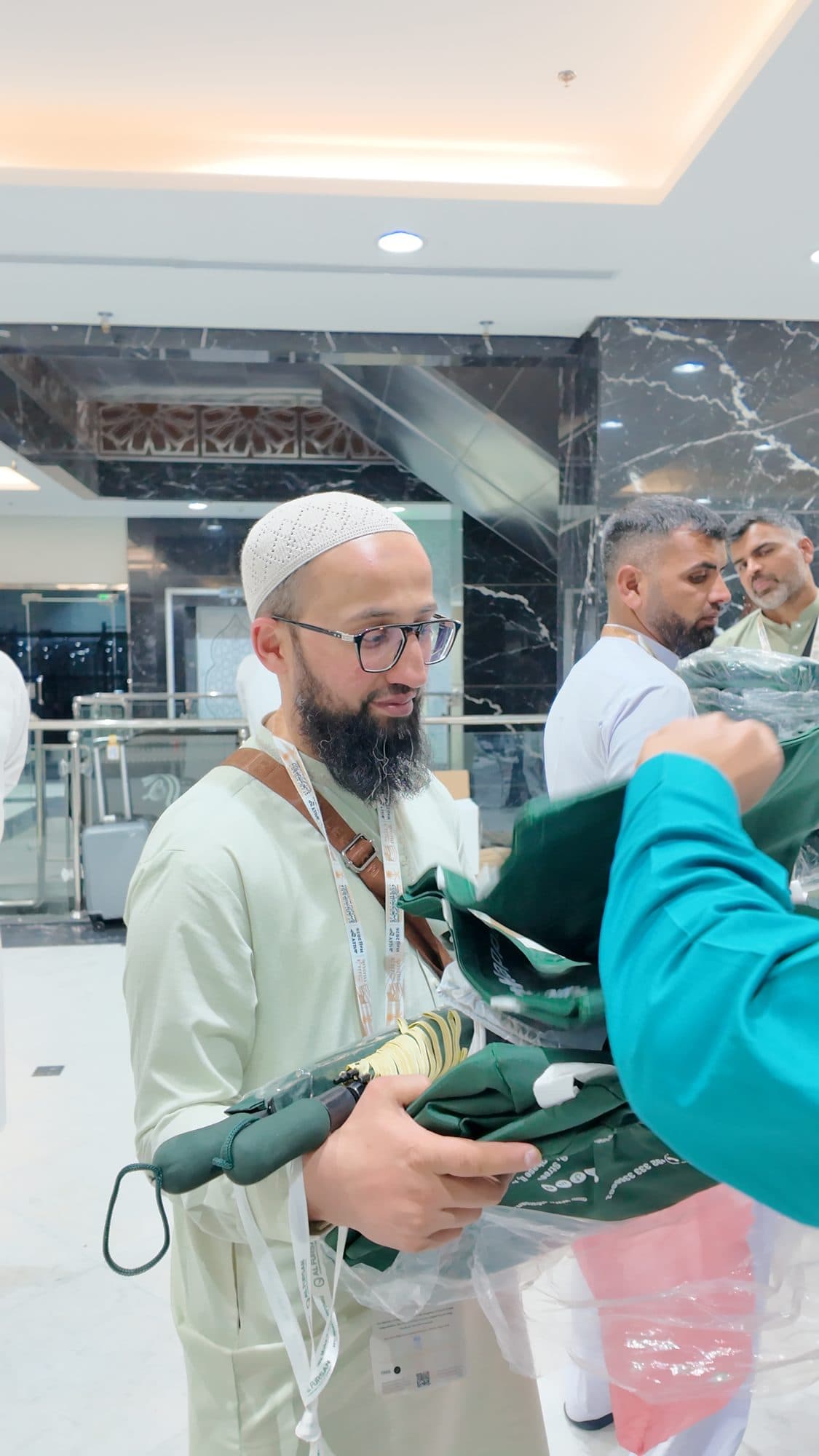
Take two sets. Something always spills, and you'll want a clean set for the 8th. Every AlFursan pilgrim gets an Ihram in the Hajj gift kit, but a second one from home is a good idea.
What Women Wear
Women don't have a special Ihram dress. They wear their normal modest clothes, in any colour, covering the whole body except the face and hands. During Ihram, the niqab and gloves are not worn. If strangers are close by, many women lower a loose cloth in front of the face without it pressing on the skin.
Women can wear stitched clothes, socks and shoes. A woman on her period can enter Ihram and do everything except Tawaf.
Before You Enter Ihram
It's sunnah to clip nails, remove unwanted hair, have a bath, and for men to put perfume on the body (not on the Ihram cloth) before making the niyyah. Then pray two rak'ah if it isn't a disliked time, make your niyyah and start the talbiyah: Labbaik Allahumma labbaik.
From that moment the restrictions begin. Men say the talbiyah aloud, women quietly.
When to Put It On: The Miqat
You must be in Ihram before you pass your miqat. For most of our Hajj 2027 groups, who go to Madinah first, that's Dhul Hulaifah (Abyar Ali) on the way from Madinah to Makkah. You'll wear Ihram at the hotel before boarding the Haramain train or bus, and make the niyyah before the miqat.
If you fly straight from Pakistan to Jeddah, as in our Makkah-first Executive package, the flight passes the miqat in the air. Most pilgrims change into Ihram at home or at the airport and make the niyyah when the crew or scholar announces the miqat. Jeddah airport itself is past the miqat, so don't plan to change there.
Then on the 8th of Dhul Hijjah you enter Ihram again for Hajj, from your hotel in Makkah. The step-by-step order is in our guide to the Hajj rituals.
The Don'ts: What's Forbidden in Ihram
For everyone: no perfume or scented products on the body or clothes, which includes scented soap, shampoo, wipes and creams. No cutting or removing hair or nails. No hunting land animals. No marriage contract, no marital relations and nothing that leads to them. No fighting, arguing or bad language, which the Quran mentions specifically for Hajj.
For men only: no stitched clothes shaped to the body, like shirts, trousers, vests or socks, and nothing covering the head or face. That includes a cap or a towel over the head while sleeping.
For women only: no niqab or gloves.
The Dos: What's Allowed
People worry about these more than they need to. You can bathe and change into a fresh Ihram. You can use an umbrella, which in May heat you'll be glad of. You can wear a watch, glasses, a money belt and a ring. You can take your medicines, use unscented soap and unscented sunscreen, brush your teeth, and gently scratch your head even if a hair falls by accident.
Keeping a small kit of unscented toiletries makes all of this easy. Our Hajj packing list has the full list.
What If You Make a Mistake?
Mistakes happen, especially to first-timers. Depending on what was done, and whether it was deliberate or by forgetfulness, the compensation can be a fidyah or sadaqah, fasting, or a dam (sacrifice of an animal in the Haram). The details vary between the madhabs, so don't guess. Tell your group scholar what happened and they'll tell you what applies.
The best protection is to know the rules before you travel. It's one of the common mistakes pilgrims make, and one of the easiest to avoid.
Coming Out of Ihram
For Umrah, you come out of Ihram after Sa'i by shaving or trimming the hair. For Hajj, most restrictions lift on the 10th of Dhul Hijjah after Rami and the haircut (and, for Hanafis, the Qurbani before it). Marital relations remain forbidden until Tawaf al-Ifadah is done.
Every AlFursan group gets Hajj orientation and training with scholars before departure, including a session on Ihram. Contact AlFursan for your Hajj 2027 booking: browse our Hajj 2027 packages or call 0333-3366661.
Related articles
Hajj Guidance
Step-by-Step Guide to the Hajj Rituals for First-Time Pilgrims
A plain, day-by-day walk through Hajj Tamattu for first-time pilgrims from Pakistan: Umrah, the 8th to the 13th of Dhul Hijjah, Rami, Qurbani, Tawaf al-Ifadah and the farewell Tawaf.
Hajj Guidance
Hajj Packing List: Essentials Every Pilgrim Should Carry
What to pack for Hajj 2027, and what to leave at home: hand carry, suitcase, the small bag for Mina and Arafat, and what your AlFursan kit already gives you.
Hajj Guidance
Common Mistakes Pilgrims Make During Hajj and How to Avoid Them
The mistakes we see every Hajj season, from booking with the wrong operator to new shoes, lost phones and empty afternoons at Arafat, and simple ways to avoid each one.